

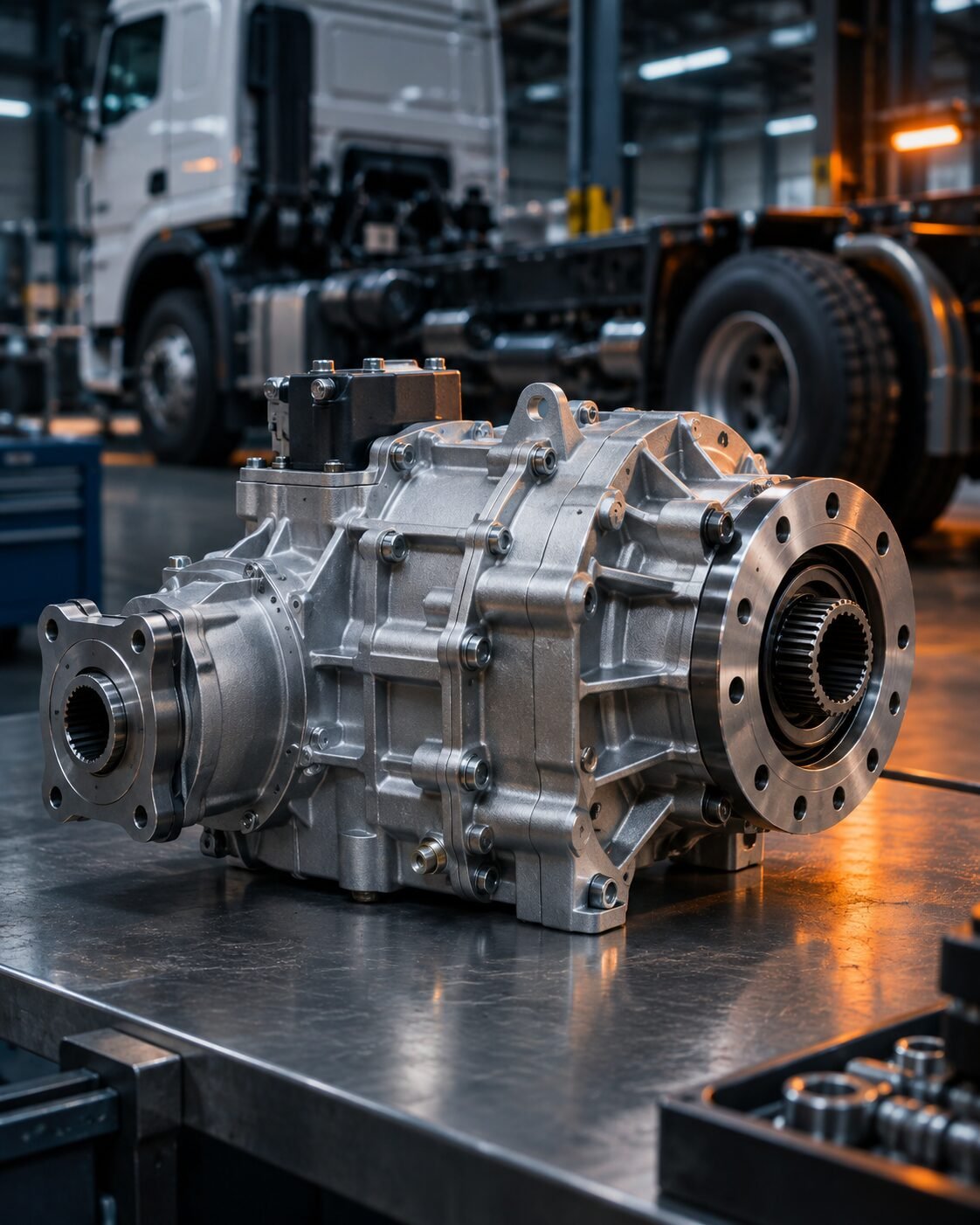
An intermediate gearbox with Hot Shift lets you engage and disengage the PTO without the main clutch pedal. That small difference means real convenience in the field and longer service life.
Engaging a conventional PTO usually means pressing the vehicle's main clutch, meshing the gears and then sending power to the equipment. Repeated dozens of times a day, this tires the operator and gradually wears the gears and the clutch.
What does Hot Shift offer?
Hot Shift works through a clutch mechanism integrated into the intermediate gearbox. As a result, the PTO can be engaged and disengaged without pressing the main clutch pedal, and power is transferred smoothly and under control.
- Ease of use: The operator manages the PTO from the cab with a single control.
- Less wear: The clutch mechanism optimizes gear synchronization and minimizes wear.
- Protection against shock loads: Controlled engagement prevents sudden load shocks, extending the life of both the gearbox and the connected pumps.
- Full input speed: In suitable designs, the gearbox can deliver the full input speed to the equipment.
Where does it make the most sense?
Applications where equipment is switched on and off frequently benefit most from Hot Shift, and sewer cleaning trucks are the most typical example. In some designs, the service outputs can also be used while the vehicle is moving.
Our CAS20AB, CAS20AD and CAS30B series are available with Hot Shift. Visit the CAS30B Series page for details.
More articles
See all
Rooftop solar for businesses: where to start?
A rooftop solar plant is one of the most tangible ways for industrial facilities to cut energy costs. Here are the first steps towards a sou...

What is a split shaft PTO and how does it work?
From sewer cleaning trucks to concrete pumps, many heavy vehicles power their equipment through a split shaft PTO. How does it work, and why...